If you’re looking for clear, timely insight into Asia’s economic direction, shifting market dynamics, and the forces shaping global trade, this article delivers exactly that. Investors, policymakers, and business leaders are navigating a region defined by rapid growth, policy recalibration, and intensifying geopolitical complexity. Staying ahead requires more than headlines—it demands structured analysis grounded in data and regional expertise.
Here, we break down the latest Horizon Headlines, unpack key Asian market movements, and assess global economic forecasts with a sharp focus on Asia-Pacific monetary policy shifts and trade agreement impacts. We also examine quarterly political developments and how they influence capital flows, currency stability, and cross-border investment sentiment.
Our insights are built on rigorous economic tracking, policy review, and continuous monitoring of regional indicators to ensure accuracy and relevance. By the end, you’ll have a clear understanding of where Asia’s economy stands now—and what that means for the months ahead.
Decoding the Global Political-Economic Landscape: Q3 2024
What really moved markets last quarter—and what was just noise? In a world flooded with headlines, distinguishing signal from spectacle is the real edge. This briefing cuts through the clutter by isolating quarterly political developments that carried measurable economic weight.
Consider:
- National elections that shifted fiscal priorities overnight
- Sudden policy reversals affecting trade corridors
- Escalating geopolitical tensions that rattled currency markets
Have you noticed how a single tariff announcement can redirect billions in capital flows? Or how central banks subtly recalibrate guidance after regional instability? These aren’t abstract dramas; they reshape forecasts, especially across the Asia-Pacific.
By examining what changed—and why it mattered—you’re better positioned for the quarter ahead (because reacting late is rarely profitable).
Asia-Pacific Policy Shifts: Elections, Alliances, and Trade Dynamics
Across Southeast Asia, recent election outcomes are already reshaping foreign direct investment (FDI)—cross-border capital invested in productive assets like factories, ports, or telecom networks. In Indonesia, post-election cabinet reshuffles have accelerated downstream mineral processing mandates in Sulawesi, tightening export rules on raw nickel while channeling incentives toward smelter construction. Meanwhile, Thailand’s new coalition has signaled revisions to Eastern Economic Corridor tax holidays, prompting Japanese auto suppliers in Chonburi to reassess expansion timelines. Some critics argue political turnover rarely alters investment fundamentals (markets, they say, outlast politicians). Yet in practice, quarterly political developments in the section often trigger immediate regulatory circulars that affect licensing and land acquisition.
At the same time, China’s National Development and Reform Commission (NDRC) has doubled down on technological self-sufficiency—prioritizing advanced lithography equipment, AI chips, and domestic industrial software. This push, framed as “indigenous innovation,” is redirecting subsidies toward inland semiconductor clusters in Hefei and Wuhan. The ripple effect? ASEAN-based electronics assemblers are recalibrating supply chains to hedge against export controls and dual-use scrutiny (think less just-in-time, more just-in-case inventory buffers).
Meanwhile, new bilateral and trilateral pacts—from Manila-Tokyo coast guard drills in the West Philippine Sea to Seoul-Washington-Tokyo chip coordination—underscore how maritime trade routes through the Malacca Strait and Luzon Strait remain strategic choke points. Pro tip: watch port modernization budgets in Batam and Da Nang; infrastructure spending often telegraphs trade realignments before tariffs do.
Japan and South Korea, for their part, are expanding export controls on sensitive materials while offering generous onshoring subsidies for battery and semiconductor plants—reshaping regional capital flows in ways that are subtle, but unmistakable.
Central Bank Divergence: Navigating Monetary Policy in a Fractured World

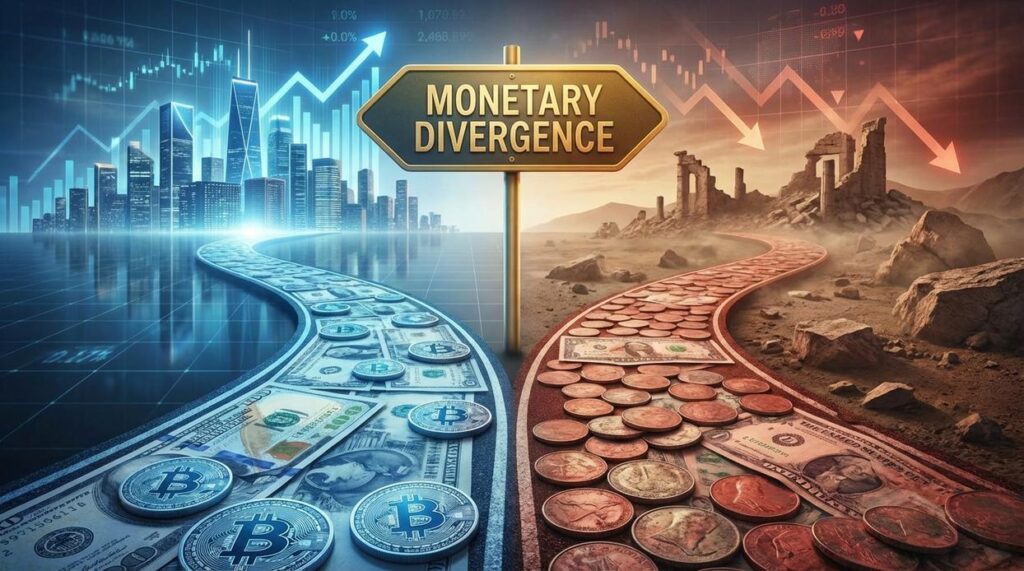
The world’s major central banks are no longer moving in sync—and that divergence matters for anyone exposed to global markets. The Federal Reserve remains cautious about cutting rates as U.S. inflation proves sticky, while the European Central Bank balances weak growth against wage pressures. Meanwhile, the Bank of Japan is inching away from ultra-loose policy after years of negative rates. In short, monetary policy divergence—when central banks pursue different interest rate paths—has become the norm, not the exception.
Political pressure is a key driver. In the U.S., election cycles heighten scrutiny on employment and borrowing costs. In Europe, fiscal strains and voter sensitivity to energy prices complicate ECB decisions. Japan faces domestic pressure to normalize policy without derailing fragile growth. These quarterly political developments in the section once exactly as it is given shape rhetoric and forward guidance, making bond markets more reactive and less predictable.
Consider USD/CNY. As U.S. yields stay elevated relative to China’s accommodative stance, capital gravitates toward dollar assets. Wider interest rate differentials—gaps between benchmark rates—typically strengthen the higher-yielding currency (IMF research supports this relationship). However, capital controls and state intervention temper yuan volatility, creating asymmetric risk for traders.
For corporate treasurers, this means prioritizing dynamic hedging strategies such as layered forward contracts. Institutional investors, meanwhile, may find selective opportunities in sovereign debt where real yields outpace inflation expectations. Still, some argue divergence is overstated and that global disinflation will force convergence. That’s possible—but until growth trajectories align, policy gaps are likely to persist.
For broader geopolitical context, see the rise of regional voices in international media.
Trade Agreements and Tariff Tensions: The New Geopolitical Chessboard
The global trade map is shifting—again. The Comprehensive and Progressive Agreement for Trans-Pacific Partnership (CPTPP) continues to expand, with the U.K.’s accession process advancing implementation timelines, while the Regional Comprehensive Economic Partnership (RCEP) deepens tariff reductions across Asia. Together, these blocs now cover roughly 30% of global GDP (World Bank, 2024), reinforcing Asia’s gravitational pull in trade flows.
However, targeted tariffs and non-tariff barriers (regulations like local content rules or licensing hurdles) are complicating the picture. Over the past quarter, automotive exports between major economies have faced stricter origin requirements, while renewable energy components—especially solar panels and EV batteries—have seen new anti-dumping probes. Consequently, costs are rising for manufacturers even as governments champion green transitions.
At the same time, quarterly political developments are accelerating supply chain “de-risking” (reducing exposure to one dominant supplier) and “friend-shoring” (moving production to politically aligned countries). For example, electronics assembly is expanding in Vietnam, auto parts manufacturing is scaling in Mexico, and semiconductor packaging investments are flowing into India.
| Sector | Tariff/Barrier Trend | Manufacturing Shift |
|——–|———————|———————|
| Automotive | Stricter origin rules | Mexico |
| Renewable Energy | Anti-dumping probes | Vietnam, India |
Meanwhile, the World Trade Organization (WTO) faces limits. Its Appellate Body remains partially paralyzed, weakening dispute enforcement, though recent panel rulings on green subsidies signal continued relevance.
So what should you do? First, prioritize markets embedded in CPTPP or RCEP supply chains. Second, diversify sourcing exposure beyond single-country risk. Finally, monitor WTO rulings—they still shape compliance norms, even in a fragmented system.
Horizon Scan: Key Political Indicators for Q4 2024
Markets don’t move on headlines alone—they move on expectations. That’s why tracking quarterly political developments is less about reacting to breaking news and more about identifying signals before capital shifts. (Think of it as reading the trailer before the full movie drops.)
For Q4 2024, three indicators stand out:
- U.S. and E.U. legislative sessions on technology regulation and carbon pricing. These policies directly affect compliance costs, innovation pipelines, and cross-border trade flows—especially for energy and AI-driven firms.
- China’s Central Economic Work Conference announcements on growth targets and stimulus. Even subtle language shifts can influence commodities, supply chains, and regional equities.
- Preliminary G20 budget releases, revealing fiscal priorities like defense, infrastructure, or green investment, which often forecast sector momentum months ahead.
Some argue politics is “priced in.” But is it ever fully priced in?
Pro tip: Track policy drafts, not just final votes—markets respond early.
Staying Ahead in Asia’s Shifting Economic Landscape
You came here to better understand how Asia’s economic signals, policy shifts, and trade dynamics shape real opportunities and risks. Now you have a clearer view of the forces driving market momentum across the region.
But insight alone isn’t enough. In a region where monetary policy changes, trade agreements, and quarterly political developments can shift capital flows overnight, staying passive is the real risk. The pain point isn’t lack of information — it’s not having the right insights at the right time to act confidently.
That’s why your next move matters. Continue tracking Horizon Headlines, monitor policy updates, and use forward-looking economic forecasts to guide your strategy. Make data-backed decisions instead of reactive ones.
If you want timely Asian market intelligence, sharp analysis, and clear signals you can act on, stay connected now. Don’t wait for the next shift to catch you off guard — leverage trusted insights and position yourself ahead of the curve today.