

If you’re searching for southeast asia investment opportunities 2026, you’re likely looking for clear, actionable insight—not broad speculation. With shifting supply chains, accelerating digital adoption, and evolving trade agreements across the Asia-Pacific region, investors need a grounded understanding of where capital is flowing and why.
This article breaks down the sectors, countries, and policy shifts expected to shape Southeast Asia’s investment landscape in 2026. From infrastructure expansion and green energy transitions to technology ecosystems and cross-border trade dynamics, we focus on the opportunities most aligned with projected economic growth and monetary policy trends.
Our analysis draws on up-to-date regional market data, trade reports, and macroeconomic forecasts to ensure you’re seeing more than headlines—you’re seeing context. By the end, you’ll have a clear view of which markets show the strongest momentum, what risks to monitor, and how regional developments could influence your investment strategy in the year ahead.
Southeast Asia in 2026 demands sharper judgment than ever. Investors see booming demographics, digital adoption, and supply-chain realignment, yet the region remains fragmented across currencies, regulations, and political cycles. The promise of southeast asia investment opportunities 2026 is real, but I would caution that forecasts hinge on fluid trade talks and shifting monetary policy. Some data points contradict each other, and we do not have perfect visibility. Focus on:
- Vietnam’s export manufacturing clusters,
- Indonesia’s nickel-to-EV value chain,
- Singapore’s green finance platforms.
Still, currency volatility and election-year spending could surprise even seasoned strategists. Prudence, diversification, and partnerships matter.
The Macro-Economic Tailwinds Shaping the Region
Investors are tired of hearing that “this is the year Asia takes off” without real context. So let’s ground 2026 in specifics. First, global supply chains continue shifting toward a “China+1” strategy—meaning companies keep operations in China but add secondary hubs in Vietnam, Malaysia, or Indonesia to reduce single-country risk. After the pandemic and geopolitical shocks (remember the semiconductor shortages?), diversification is less buzzword and more boardroom mandate.
At the same time, trade friction is easing. The Regional Comprehensive Economic Partnership (RCEP) lowers tariffs and harmonizes rules of origin across 15 economies, making it easier for manufacturers to source components regionally and export competitively. That matters for southeast asia investment opportunities 2026 because streamlined trade directly boosts margins.
Meanwhile, monetary policy is stabilizing. With anticipated interest rate steadiness in hubs like Singapore, foreign direct investment flows face fewer volatility surprises. Predictability, in finance, is oxygen.
And then there’s the demographic dividend—a young, urbanizing population entering higher income brackets. Rising purchasing power fuels demand for housing, tech, healthcare, and travel. Skeptics argue growth could stall under global headwinds. Fair. Yet structural drivers—trade integration, capital stability, and consumers with cash to spend—are hard to ignore today.
High-Growth Sector 1: The Digital Economy’s Next Phase
A few years ago, I sat in a Jakarta warehouse watching staff manually sort hundreds of e-commerce parcels. Orders were booming, yet deliveries lagged. That disconnect—between shiny consumer apps and clunky back-end systems—told me where the real opportunity was.
Southeast Asia’s digital economy is projected to surpass $300 billion by 2026 (Google, Temasek, Bain e-Conomy SEA Report). Yet while headlines celebrate super apps and viral marketplaces, the B2B infrastructure—the behind-the-scenes technology that enables businesses to operate—remains underbuilt. Think of it as the plumbing beneath a skyscraper (not glamorous, but try living without it).
First, consider e-commerce logistics and last-mile delivery. “Last-mile” refers to the final step of getting goods from a warehouse to a customer’s door—often the most expensive and inefficient segment. AI-driven route optimization and demand forecasting are reducing fuel costs and delivery times dramatically. Pro tip: Margins often improve fastest in logistics when fuel and labor efficiencies compound.
Meanwhile, cross-border payment gateways and SME-focused fintech platforms are quietly expanding. SMEs (small and medium-sized enterprises) make up over 90% of businesses in ASEAN (Asian Development Bank). They need affordable currency exchange, embedded finance, and frictionless settlement tools.
Some argue consumer platforms still hold more upside. Fair. But as in “The Matrix,” once you see the code—the infrastructure layer—you realize that’s where enduring value compounds. For investors exploring southeast asia investment opportunities 2026, the backbone may matter more than the storefront.
High-Growth Sector 2: Green Energy and Sustainable Infrastructure
As global ESG mandates (Environmental, Social, and Governance investing standards that guide sustainable capital allocation) tighten, capital is flowing decisively into Southeast Asia’s energy transition. Governments and institutional investors alike are prioritizing lower-carbon growth models—and that shift is creating clear winners.
First, consider the EV supply chain. Indonesia’s nickel processing industry sits upstream, supplying a critical battery input (nickel is essential for high-density lithium-ion batteries). Vietnam and Thailand, by contrast, focus downstream on EV component manufacturing and assembly. Upstream processing offers commodity leverage—higher volatility but potentially higher margins. Downstream manufacturing provides steadier industrial growth tied to regional demand. Think raw materials vs. finished iPhones—both profitable, but with different risk profiles.
Meanwhile, utility-scale renewables present another compelling comparison: solar farms vs. geothermal plants. Solar projects benefit from falling panel costs and scalable deployment. Geothermal, abundant in Indonesia and the Philippines, offers stable baseload power but requires higher upfront exploration risk (pro tip: investors should evaluate government feed-in tariffs and power purchase agreements carefully). According to IRENA, Southeast Asia must triple renewable capacity by 2030 to meet climate targets.
Beyond energy, rapidly expanding cities face mounting pressure for modern waste management and water purification systems. Infrastructure here may lack glamour, but demand is structural, not cyclical.
For investors evaluating southeast asia investment opportunities 2026, understanding these side-by-side dynamics is essential—especially amid broader market swings discussed in understanding stock market volatility in east asia.
Country Spotlights: Where to Deploy Capital for Maximum Impact
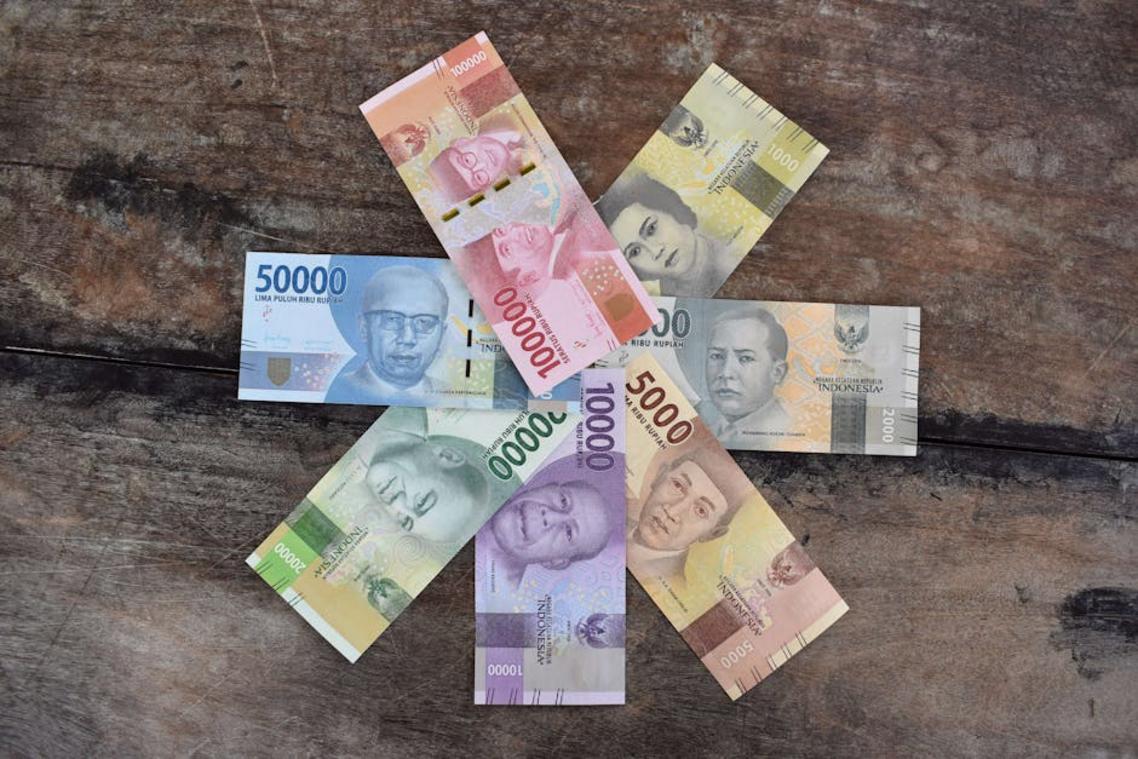
Capital in 2026 is not just chasing growth — it’s chasing proof of scalability.
Vietnam: Manufacturing’s Precision Play
Vietnam has solidified its status as a manufacturing linchpin. In 2023, the country attracted over $36 billion in foreign direct investment (Vietnam Ministry of Planning and Investment), much of it targeting high-tech electronics. Samsung alone produces roughly half of its global smartphones there. Add government incentives for renewable energy hardware, and Vietnam becomes more than a low-cost hub — it’s a strategic production base (think “factory floor meets innovation lab”).
Indonesia: Scale Meets Resources
Indonesia’s 270+ million population fuels one of Southeast Asia’s fastest-growing digital economies, projected to exceed $130 billion in GMV by 2025 (Google–Temasek–Bain e-Conomy SEA report). It’s also home to the world’s largest nickel reserves, a critical EV battery component (USGS). For investors eyeing southeast asia investment opportunities 2026, Indonesia blends consumer tech upside with hard-asset leverage.
The Philippines: BPO 2.0
The Philippines’ BPO sector generated $35 billion in 2023 revenue (IBPAP). Now, firms are shifting toward AI-enabled customer support and data analytics — higher margins, stickier contracts.
Malaysia: Semiconductor Stronghold
Malaysia accounts for about 13% of global semiconductor testing and packaging (MIDA). Stable policy and infrastructure make it a dependable advanced manufacturing play.
A Strategic Framework for 2026 Investment Success
The real advantage in 2026 isn’t chasing hype—it’s owning the rails everyone else runs on. By focusing on enabling infrastructure, investors tap into durable growth instead of crowded consumer plays (where margins vanish fast).
Here’s what you gain:
- Stronger defensibility through B2B digital platforms embedded in daily operations.
- Long-term upside from green energy supply chains tied to policy support and net-zero targets (IEA projects renewables to supply 50% of global electricity growth through 2026).
- Geographic leverage in Vietnam and Indonesia, two engines of southeast asia investment opportunities 2026.
Do the diligence now, and you position for compounding returns—not short-lived momentum.
The Road Ahead for Investors
You set out to understand where Asia’s markets are heading and how to position yourself for growth. Now you have a clearer view of the policy shifts, capital flows, and trade dynamics shaping the region’s future.
The reality is simple: uncertainty in global markets is rising, and missing the right move in Asia could mean falling behind. Inflation cycles, monetary policy adjustments, and cross-border trade realignments are already influencing asset performance. Acting without reliable insight is a risk most investors can’t afford.
That’s why staying focused on southeast asia investment opportunities 2026 is critical. The region’s evolving supply chains, digital expansion, and infrastructure commitments are creating openings for those prepared to move strategically.
If you’re serious about protecting your capital and capturing growth, now is the time to monitor policy updates, track sector momentum, and align your strategy with forward-looking economic data. Rely on trusted market intelligence, review the latest regional forecasts, and position your portfolio before shifts become headlines.
The next move is yours—stay informed, act decisively, and turn insight into advantage.