
If you’re searching for clear insight into asia pacific interest rate trends, you’re likely trying to understand how shifting monetary policies across the region could impact currencies, equity markets, borrowing costs, and trade flows. With central banks responding to inflation pressures, growth slowdowns, and global policy divergence, staying ahead of rate movements in the Asia-Pacific is no longer optional—it’s essential for informed decision-making.
This article breaks down the latest policy signals, rate adjustments, and forward guidance from key economies across the region. We analyze how these shifts connect to global economic forecasts, capital flows, and trade dynamics, giving you a practical view of what’s changing and why it matters.
Our insights are grounded in ongoing monitoring of central bank statements, macroeconomic data releases, and cross-border market reactions—so you’re not just getting headlines, but context you can rely on. By the end, you’ll have a clearer understanding of where rates are heading and how those moves could shape the broader economic landscape.
Across the Asia-Pacific, central banks are charting sharply different paths. Japan is cautiously exiting negative rates, while Australia remains vigilant on inflation. Meanwhile, parts of Southeast Asia are easing to spur growth. These asia pacific interest rate trends reflect domestic inflation, currency pressures, and trade exposure.
So what should investors do? First, track each country’s inflation data and central bank statements; policy signals often appear there before markets react. Next, diversify currency exposure rather than betting on one trajectory. For example, a stronger yen can offset volatility in higher-yielding markets. Finally, stress-test portfolios against both rate hikes and cuts. Regularly.
Monetary Easing in East Asia: China and Japan’s Unique Paths
East Asia’s two largest economies are easing policy—but in strikingly different ways. Understanding why matters if you’re allocating capital across the region.
China’s Pro-Growth Stance
The People’s Bank of China (PBOC) has cut the Loan Prime Rate (LPR)—the benchmark lending rate banks offer their best clients—and reduced reserve requirement ratios (RRR), which determine how much cash banks must hold in reserve. Lowering both frees up liquidity and reduces borrowing costs. The goal is clear: stabilize a struggling property sector and revive domestic consumption after uneven post-pandemic growth. Real estate once accounted for roughly a quarter of China’s economic activity (National Bureau of Statistics), so weakness there ripples outward.
Some critics argue rate cuts risk inflating debt bubbles again. That’s fair. But with consumer confidence subdued and youth unemployment elevated, targeted easing is arguably the lesser risk. If you’re investing in Chinese equities, prioritize consumer staples and infrastructure-linked firms that directly benefit from credit expansion.
Japan’s Historic Pivot
The Bank of Japan (BOJ) ended negative interest rates in 2024, framing it as normalization—not tightening. Negative rates meant banks paid to park excess reserves, an extraordinary step to fight deflation. Now, sustained wage growth—supported by annual “shunto” wage negotiations—has given policymakers confidence. Yet deflationary psychology persists (consumers delaying spending in expectation of lower prices).
• Watch wage growth data before increasing yen exposure.
• Favor exporters if the yen weakens during policy transition.
The Divergence Effect
These moves defy broader asia pacific interest rate trends and global tightening cycles. Divergence pressures both the yuan and yen, influencing trade flows and capital allocation. Position portfolios accordingly—currency volatility is not a side show; it’s the headline.
The Inflation Fight in Southeast Asia: ASEAN’s Cautious Stance

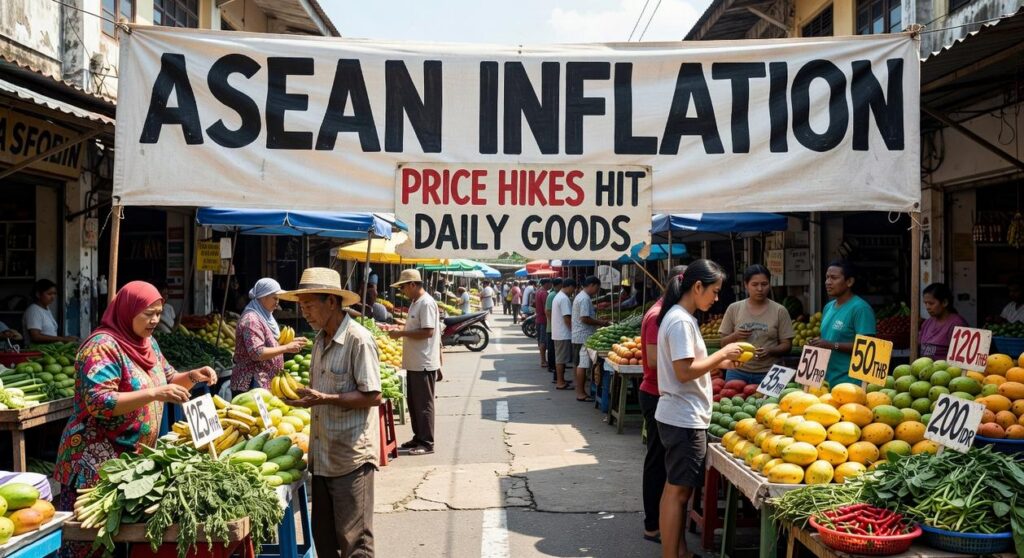
Across Southeast Asia, central banks are holding the line. Indonesia’s Bank Indonesia, Bangko Sentral ng Pilipinas, and Bank Negara Malaysia have all opted to keep policy rates steady, even as headline inflation has begun to ease from its 2022–2023 peaks. At first glance, that restraint may seem overly cautious. After all, if inflation is cooling, shouldn’t borrowing costs fall too?
Not necessarily.
The Currency Shield
The primary concern is currency stability. When the US Federal Reserve keeps rates elevated, the US dollar strengthens. If ASEAN economies cut rates too quickly, capital can flow out in search of higher returns (a phenomenon known as capital flight, where investors rapidly move funds across borders). That weakens local currencies, making imports—especially fuel and food—more expensive. In turn, that fuels imported inflation, meaning price increases driven by higher foreign costs rather than domestic demand.
For example, during past tightening cycles, emerging Asian currencies depreciated sharply against the dollar, pressuring inflation and reserves (IMF Regional Economic Outlook, 2023). So while inflation may be easing, policymakers are protecting their currencies as a defensive buffer.
Sub-Regional Nuances
That said, ASEAN is not monolithic. Vietnam has leaned toward pro-growth rate cuts to stimulate credit and manufacturing. Meanwhile, Thailand is balancing rate policy against high household debt levels, wary that excessive tightening could strain consumers.
What Should You Do?
If you’re tracking asia pacific interest rate trends, focus less on headline inflation and more on currency performance and capital flows. Consider favoring markets with strong foreign reserves and prudent fiscal policy. In this environment, patience—not aggressive rate-cut expectations—may be the smarter bet.
Hawkish Holds Down Under: Australia and New Zealand’s Policy Tightrope
The RBA’s Inflation Watch
The Reserve Bank of Australia is standing still—but it’s not relaxed. Policymakers describe their stance as data-dependent, meaning each rate decision hinges on incoming figures rather than a preset path. The sticking point is services inflation—price rises in sectors like insurance, rents, and dining out that tend to move slowly and feel stubborn, like humidity that won’t lift. While headline inflation has cooled, the RBA keeps the door open to further hikes if price pressures re-accelerate. Critics argue higher rates risk overcorrecting and stalling growth. Yet the Bank counters that easing too soon could reignite inflation expectations (a mistake seen in the 1970s, according to the RBA’s historical analysis).
New Zealand’s Firm Stance
Across the Tasman, the RBNZ remains among the most hawkish in the developed world. A tight labor market and strong wage growth continue to feed domestic inflation. Walking through Auckland, you can almost feel the squeeze—higher borrowing costs, cautious retailers, quieter open homes. Some economists say policy is already restrictive enough. The RBNZ argues persistence is essential to anchor credibility.
Impact on Consumers
Mortgage holders feel repayments bite harder each month, trimming discretionary spending. This tension shapes asia pacific interest rate trends and connects directly to quantitative tightening in the region what it means for growth.
Economic Implications: Currency Volatility and Investment Flows
The Carry Trade in 2026 looks like a tale of two currencies: low-yield JPY versus higher-yield USD and select APAC units. When interest rate differentials widen, capital predictably exits Japan and hunts return elsewhere—a classic A vs B allocation shift. Critics argue carry trades invite sudden reversals; however, as asia pacific interest rate trends diverge, yield gaps still anchor flows. Meanwhile, a strong dollar complicates trade dynamics: exporters with favorable agreements face pricier invoices and thinner margins, compared with peers invoicing in weaker currencies. In short, rate policy shapes portfolios and trade.
Forward Outlook: Key Rate Trajectories for the Next Six Months
Last year, I sat in a Jakarta café watching traders refresh bond yields like sports scores. That memory frames today’s asia pacific interest rate trends, where divergence is the rule. First, China is likely to continue easing as growth wobbles. Meanwhile, the BOJ appears set on a cautious, wait-and-see pause, weighing wage data against fragile demand. In contrast, ASEAN and Australia may hold rates higher for longer, resisting premature cuts until global inflation clearly cools. Of course, skeptics ask: what if the Fed pivots sooner? Even then, domestic trade-offs dominate.
Navigating What Comes Next in the Asia-Pacific Rate Cycle
You came here to understand how shifting asia pacific interest rate trends are shaping markets, currencies, trade flows, and investment decisions. Now you have a clearer view of the policy direction, the regional divergences, and the economic signals driving central bank moves across the region.
The reality is that rate changes across Asia-Pacific don’t just influence bond yields—they impact borrowing costs, capital allocation, consumer demand, and cross-border trade. If you misread the direction or timing of these shifts, the cost can be missed opportunities, weaker portfolio performance, or exposure to unnecessary risk.
The good news? When you track monetary policy shifts and their ripple effects early, you position yourself ahead of market reactions instead of chasing them.
Your next move is simple: stay proactive. Monitor central bank signals, evaluate how rate adjustments affect your sector exposure, and align your strategy with forward-looking economic indicators—not yesterday’s headlines.
If you want sharper, faster insight into Asia-Pacific monetary policy and its real economic impact, rely on a trusted source for timely analysis and forward-focused forecasts. Get the clarity you need—start tracking the latest updates now and make your next financial decision with confidence.