

Inflation is no longer a local story—it’s a global force reshaping markets, currencies, and household budgets. If you’re searching for a clear world inflation trends forecast, you’re likely trying to understand where prices are headed, how central banks may respond, and what it all means for growth across Asia and beyond.
This article delivers a focused, data-driven look at current inflation patterns, monetary policy shifts in the Asia-Pacific region, and the global ripple effects influencing trade, investment, and consumer demand. We break down the latest economic indicators, compare regional trajectories, and highlight the forces most likely to shape the months ahead.
Our analysis draws on up-to-date economic reports, central bank statements, and cross-border market data to ensure accuracy and relevance. Whether you’re an investor, policymaker, or business leader, you’ll gain a clearer view of where inflation is stabilizing, where risks are rising, and what to watch next in the global economic landscape.
Global inflation isn’t cooling into calm; it’s splintering into regional stories. While headline rates have eased since 2022 peaks (IMF, 2024), I believe the real shift is structural. Energy transition costs, reshoring, and aging demographics are quietly resetting price floors.
So what comes next?
- The U.S. faces sticky services inflation driven by wages.
- Europe wrestles with energy volatility and fiscal strain.
- Asia-Pacific, especially China and Japan, exports disinflation through trade channels.
In my view, investors relying on a single world inflation trends forecast will be blindsided. Instead, watch shipping rates, semiconductor cycles, and tone shifts—they’re warning lights.
The Great Decoupling: Divergent Inflation Paths for East and West
For much of 2021–2023, inflation felt like a synchronized global event. That era is fading. Today, the US and EU face sticky services inflation—persistent price growth in labor‑intensive sectors like healthcare, housing, and hospitality. Services inflation is harder to tame because it’s closely tied to wages. With unemployment near historic lows in both regions (U.S. Bureau of Labor Statistics; Eurostat), employers must raise pay to attract workers, and those costs filter into consumer prices.
Massive post‑pandemic fiscal stimulus continues to echo through Western economies. Critics argue inflation should have cooled faster as energy prices stabilized. Yet tight labor markets and resilient consumer demand keep price pressures alive (an inconvenient sequel no central banker asked for).
Contrast that with Asia.
China is battling deflationary pressures—a sustained decline in general price levels—driven by weak property markets and cautious consumer spending (National Bureau of Statistics of China). Lower Chinese export prices dampen global goods inflation. Meanwhile, Japan is attempting something historic: exiting decades of disinflation. The Bank of Japan’s policy shift in 2024 signaled cautious optimism, though wage growth remains the key test.
What does this mean for you?
- Currency swings now play a bigger role in household inflation.
- A stronger dollar or euro can make imports cheaper.
- A weaker yen can raise import costs in Japan.
This divergence reshapes any world inflation trends forecast. The core insight is simple: synchronized global inflation is over. Economic predictions now require a region‑specific lens—not a one‑size‑fits‑all model.
Central Bank Unanimity Ends: Decoding Monetary Policy Shifts
For years, major central banks moved in near lockstep. When the Fed tightened, the ECB followed. When stimulus flowed, the BOJ and PBOC added liquidity. That era is ending. Diverging growth rates, political pressures, and uneven inflation paths have fractured the old consensus.
Some analysts argue divergence is healthy—proof that domestic conditions, not global peer pressure, now guide decisions. Fair point. But synchronized policy once acted like guardrails for global stability. Without it, volatility rises (and markets, like toddlers, don’t love uncertainty).
The Fed & ECB’s Dilemma
Both face the “higher for longer” narrative. Inflation has cooled but not vanished. Cutting too soon risks reigniting price pressures; waiting too long risks recession. My speculation: modest rate cuts could begin late 2026 if labor markets soften materially. Political pressure will intensify as borrowing costs strain households and governments.
Asia-Pacific Pivot
The BOJ potentially ending negative rates would strengthen the yen and unwind global carry trades. Meanwhile, the PBOC’s targeted easing—focused on property and manufacturing—signals selective stimulus, not a flood. This asymmetry could:
- Tighten global liquidity
- Reshape capital flows
- Pressure emerging-market currencies
Looking ahead, conflicting policies will likely amplify currency swings and reshape trade balances. The world inflation trends forecast suggests uneven disinflation, meaning exchange rates may become the primary transmission channel for imported inflation. Expect sharper FX cycles—and more policy surprises.
Geopolitics and Supply Chains: The New Frictions Driving Prices
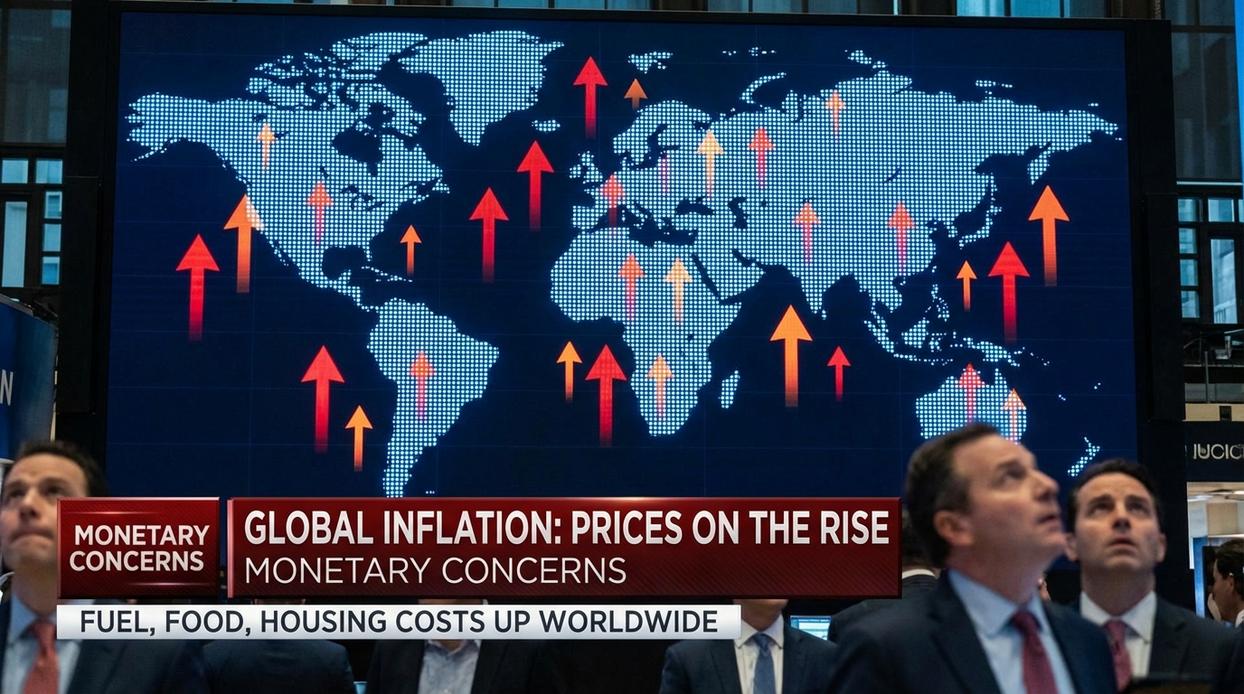
For a while, it was convenient to blame inflation on pandemic bottlenecks. Closed ports, container shortages, factories offline — case closed. However, that explanation is aging fast. What we’re seeing now isn’t temporary congestion; it’s structural rewiring of global trade.
Geopolitical flashpoints are at the center. Ongoing conflicts in the Red Sea have forced ships to reroute around Africa, adding weeks of transit time and sharply higher fuel and insurance costs (Lloyd’s Market Association data shows war-risk premiums rising during active conflict periods). Meanwhile, tensions between the U.S. and China have reshaped semiconductor and rare earth supply chains, constraining availability and lifting input prices. When critical shipping lanes or commodities become bargaining chips, volatility becomes the norm — not the exception.
At the same time, governments are embracing “friend-shoring,” meaning sourcing goods from political allies rather than the lowest-cost producer. In theory, it improves resilience. In practice, it sacrifices efficiency. Globalization optimized for cost; friend-shoring optimizes for alignment. Those goals rarely overlap (think less Amazon Prime, more contingency planning).
Critics argue diversified regional trade will eventually stabilize prices. Possibly. Yet duplicating factories, building parallel logistics networks, and subsidizing domestic production is inherently inflationary.
So what should you do? First, prioritize companies with diversified supplier bases and pricing power. Second, monitor trade agreements as closely as earnings reports. Finally, treat world inflation trends forecast as structurally higher than pre-2020 baselines.
For broader context, review recession risks in 2026 expert predictions and data insights: https://ftasiaeconomy.com.co/recession-risks-in-2026-expert-predictions-and-data-insights/.
The bottom line: geopolitics is now a permanent line item in your inflation assumptions.
Your Inflation Forecasting Toolkit: Key Indicators to Monitor
Tired of waiting for headline CPI to tell you what you already feel at the grocery store? By the time it flashes across the news, markets have usually moved. That lag is maddening.
Go deeper:
- Producer Price Index (PPI): Tracks input costs for businesses. Rising PPI often signals future consumer price hikes as firms pass costs along (U.S. Bureau of Labor Statistics).
- Wage growth data: Persistent pay gains can entrench services inflation—sticky and hard to reverse.
- Shipping benchmarks (e.g., Drewry World Container Index): Freight spikes often foreshadow goods inflation.
- Asia-Pacific PMI data: A diffusion index measuring business activity; weakening readings can signal cooling demand.
- Energy and metals (Brent crude, LNG, copper): Core drivers of production costs globally.
If you’re relying solely on world inflation trends forecast headlines, you’re already behind.
Positioning for a Fragmented Economic Future
The era of predictable, low inflation is over. Instead, we face regional divergence, geopolitical friction, and structural price pressures reshaping markets in uneven ways. Consequently, the central challenge for businesses and investors is no longer chasing growth—it’s navigating uncertainty with intention.
So what should you do? First, anchor decisions to data, not headlines. Monitor supply chains, labor dynamics, and world inflation trends forecast updates regularly. Next, diversify across regions and asset classes to buffer localized shocks. Finally, build flexibility into budgets and portfolios. In short, shift from reacting to inflation surprises to anticipating fragmented patterns before they surface.
Navigate What’s Next in the Global Economy
You came here looking for clarity on where inflation, monetary policy, and Asia-Pacific markets are heading. Now you have a sharper understanding of the forces driving price pressures, policy shifts, and cross-border trade impacts shaping today’s economy.
The reality is this: uncertainty around inflation and rate movements makes planning difficult. Whether you’re an investor, policymaker, or business leader, not knowing what’s coming next can stall decisions and erode confidence. That’s why staying aligned with reliable data and timely insights isn’t optional—it’s essential.
Our world inflation trends forecast and regional economic analysis are built to help you anticipate shifts before they hit headlines. We combine market intelligence, policy tracking, and forward-looking projections so you can act with confidence instead of reacting under pressure.
If you want fewer surprises and smarter positioning in volatile markets, start leveraging our in-depth forecasts and real-time updates today. Join the thousands of readers who rely on our insights—stay informed, stay prepared, and take control of your next move now.