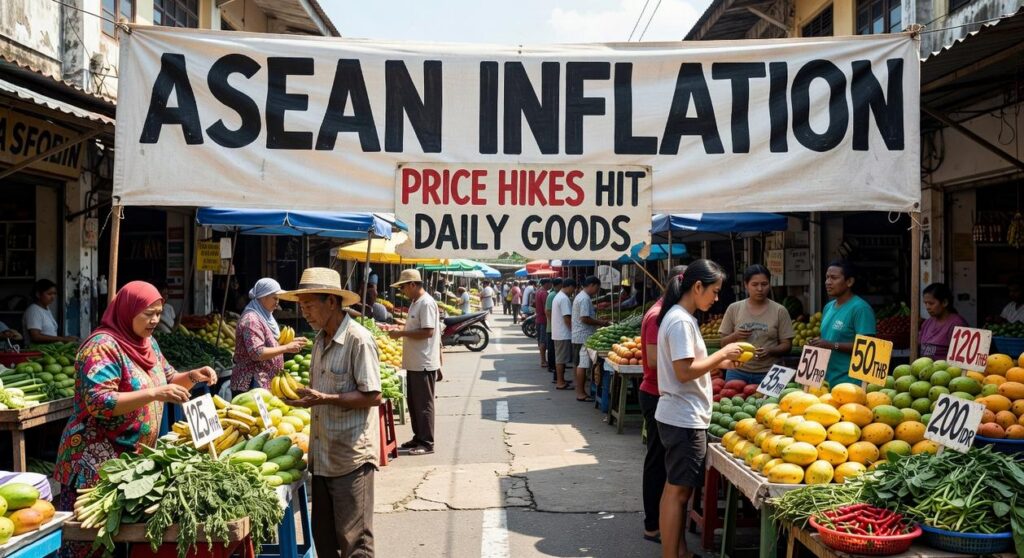

Investors, policy analysts, and business leaders across the region are searching for clarity as interest rate decisions, inflation targets, and currency interventions continue to diverge across major economies. If you’re looking for a clear, data-driven asia pacific monetary policy comparison, this article delivers a focused breakdown of how central banks across the region are responding to shifting growth forecasts, inflation pressures, and global market volatility.
We analyze the latest rate moves, forward guidance, and liquidity measures from key Asia-Pacific economies, highlighting where policies are tightening, where stimulus remains in place, and what those differences mean for capital flows, trade competitiveness, and currency stability.
Our insights are grounded in up-to-date economic data, central bank statements, and regional market performance trends, reviewed alongside established macroeconomic research. By the end, you’ll have a concise understanding of how monetary strategies across the Asia-Pacific region compare—and how those differences could shape investment and trade decisions in the months ahead.
Navigating the Diverse Economic Currents of the Asia-Pacific
The Asia-Pacific isn’t one economy marching in sync; it’s more like an orchestra tuning up—Japan sustaining ultra-loose policy while Australia tightens to curb inflation. That divergence matters.
Too often, analysts apply a blanket forecast across the region. The result? Mispriced risk and missed growth pockets. An asia pacific monetary policy comparison gives you clarity on why China may stimulate to boost demand while India hikes to defend currency stability.
What’s in it for you? Sharper forecasts, smarter capital allocation, and fewer surprises when exchange rates swing. In volatile markets, nuance isn’t optional—it’s profitable.
Japan’s Battle Against Deflation: An Outlier’s Policy
For years, while the Federal Reserve and the European Central Bank raced to hike interest rates, the Bank of Japan (BoJ) stayed planted in stimulus mode. In fact, its ultra-dovish stance has made it the outlier in any asia pacific monetary policy comparison. At the heart of this approach is Yield Curve Control (YCC)—a policy where a central bank targets a specific long-term interest rate, typically by buying government bonds to keep yields near a set level. The goal? Anchor borrowing costs near zero and finally generate stable 2% inflation.
And yet, despite decades of near-zero rates and massive asset purchases, Japan has struggled to escape deflation—a persistent decline in prices that discourages spending and investment (IMF). Critics argue the policy distorts bond markets and weakens financial institutions. They have a point: prolonged intervention can reduce liquidity and price discovery. However, supporters counter that Japan’s aging population and entrenched deflationary mindset require extraordinary measures. It’s less “Top Gun: Maverick” boldness and more slow-burn “Groundhog Day” repetition.
Recently, however, subtle tweaks—wider yield bands and speculation about ending negative rates—have fueled pivot rumors. The BoJ is closely watching wage growth, core inflation trends, and inflation expectations (Bank of Japan reports). Sustainable wage gains remain the key signal.
Meanwhile, a weaker yen—partly a byproduct of low rates—boosts exports but raises import costs, squeezing households and businesses reliant on energy imports. So, although Japan’s policy shields growth, it also imports inflation. The balancing act continues.
China’s ‘Managed’ Stimulus’: Balancing Growth and Stability
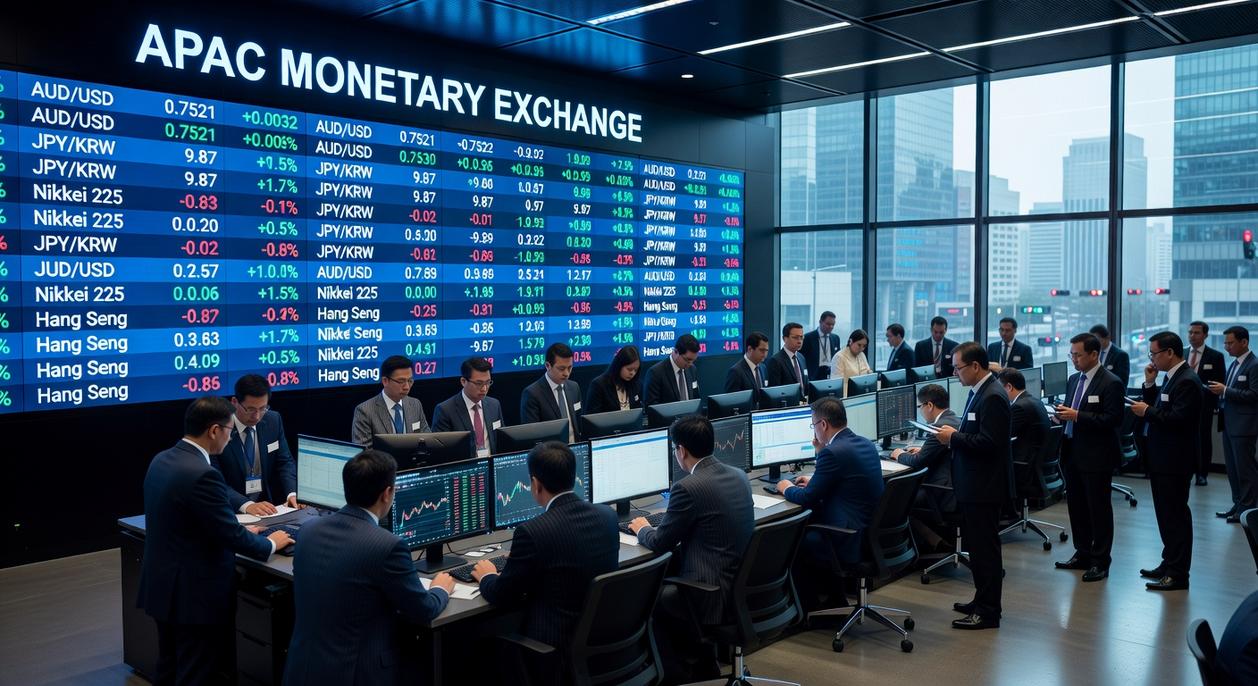
China’s central bank faces a delicate balancing act. On one hand, the People’s Bank of China (PBoC) must support a slowing economy. On the other, it must prevent capital flight (when investors move money abroad) and safeguard financial stability. This dual mandate shapes what many call China’s “managed” stimulus—measured, targeted, and cautious rather than dramatic.
Unlike the U.S. Federal Reserve’s broad interest rate cuts, the PBoC often relies on more surgical tools. For example, the Reserve Requirement Ratio (RRR)—the percentage of deposits banks must hold in reserve—can be lowered to free up liquidity. Meanwhile, the Medium-term Lending Facility (MLF) provides funding to banks at specific rates, guiding credit without flooding the system. In other words, instead of opening the monetary floodgates, policymakers adjust the valves.
However, the property sector complicates matters. Real estate once accounted for roughly 25–30% of China’s GDP when including related industries (National Bureau of Statistics of China). With major developers defaulting, the PBoC must inject liquidity without encouraging reckless borrowing again (a bit like watering a plant without drowning it).
At the same time, currency management remains central. The PBoC sets a daily yuan “fix,” a reference rate limiting volatility. This tight control stabilizes trade competitiveness but constrains aggressive easing, since sharp rate cuts could weaken the currency.
| Tool | Purpose | Risk Managed |
|——|———-|————–|
| RRR Cut | Boost bank lending | Liquidity crunch |
| MLF | Guide medium-term rates | Credit overheating |
| Yuan Fix | Stabilize currency | Capital flight |
For broader context, see how central banks in asia pacific are responding to inflation.
Ultimately, any asia pacific monetary policy comparison shows China’s approach stands out: stimulus, yes—but always with one foot on the brake.
ASEAN’s Inflation Fight: A Region on the Defensive
Across Southeast Asia, inflation has become the policy villain of the decade. Central banks in Indonesia, the Philippines, and Malaysia aren’t just tweaking rates—they’re defending their economies against imported price shocks, particularly in energy and food. When global oil and grain prices surged after Russia’s invasion of Ukraine, emerging markets felt it almost instantly (fuel and rice are politically sensitive everywhere). According to the World Bank, food accounts for a significantly larger share of household spending in Southeast Asia than in advanced economies, which makes inflation especially painful.
At the same time, the U.S. Federal Reserve’s aggressive rate hikes since 2022 cast a long shadow. Higher U.S. yields tend to pull capital away from emerging markets, weakening local currencies. In my view, ASEAN central banks had little choice but to follow suit. Letting currencies slide too far risks even higher import costs and destabilizing capital outflows. It’s a defensive game, not an offensive one.
Take Indonesia. Bank Indonesia has pursued what it calls a “pro-stability” policy—raising rates to anchor the rupiah and manage inflation expectations. The logic is simple: if households and firms believe prices will stabilize, they behave accordingly. Credibility, in monetary policy terms, is everything (and painfully hard-won).
That said, not every country has marched in lockstep. Vietnam, for instance, has occasionally cut rates to support growth when domestic conditions allowed. This divergence highlights the limits of any broad asia pacific monetary policy comparison. Each economy faces unique trade-offs. Personally, I think stability must come first—but growth can’t be sidelined forever.
A Region Moving to Different Drums
To recap, there is no single APAC playbook—only contrasting rhythms. Japan continues its long experiment with easing, like a marathon runner refusing to slow down. China, meanwhile, applies managed stimulus—carefully adjusting the thermostat so growth warms up without overheating. Across ASEAN, central banks are still in inflation-fighting mode, gripping rate tools the way a pilot steadies a plane in turbulence.
Yet above all these domestic choices looms one gravitational force: the U.S. Federal Reserve. When the Fed shifts, currencies, capital flows, and borrowing costs across the region feel the pull.
So what are the signposts ahead? Will the Bank of Japan finally pivot? Can China revive momentum without inflating a debt bubble? And when will ASEAN policymakers gain room to cut rates? This asia pacific monetary policy comparison is essential for forecasting currencies, trade flows, and investment direction.
Navigating the Next Wave of Asia-Pacific Monetary Shifts
You set out to understand how shifting policies across the region are shaping markets, currencies, and capital flows. Now you have a clearer view of how interest rate moves, inflation targets, and central bank signals are influencing investment conditions across borders.
The real challenge isn’t accessing information — it’s keeping up with rapid policy pivots that can impact portfolios overnight. From tightening cycles to stimulus signals, every adjustment carries consequences for growth forecasts, trade balances, and asset performance.
Staying ahead requires consistent tracking of policy signals and informed asia pacific monetary policy comparison to spot divergence before it hits the headlines. That’s how you protect capital and position for opportunity instead of reacting too late.
If you want sharper insights, forward-looking forecasts, and clear breakdowns of regional monetary shifts, start following our in-depth reports today. Our trusted analysis helps investors and decision-makers act with confidence — not guesswork. Stay informed, stay prepared, and make your next move with clarity.